
Chapter five
The environment
Explore how we work with the landscape at Lionheart Farms, from caring for the soil around our coconut palms to the materials we use beyond the farm.
By CÓCOES · Published · Updated
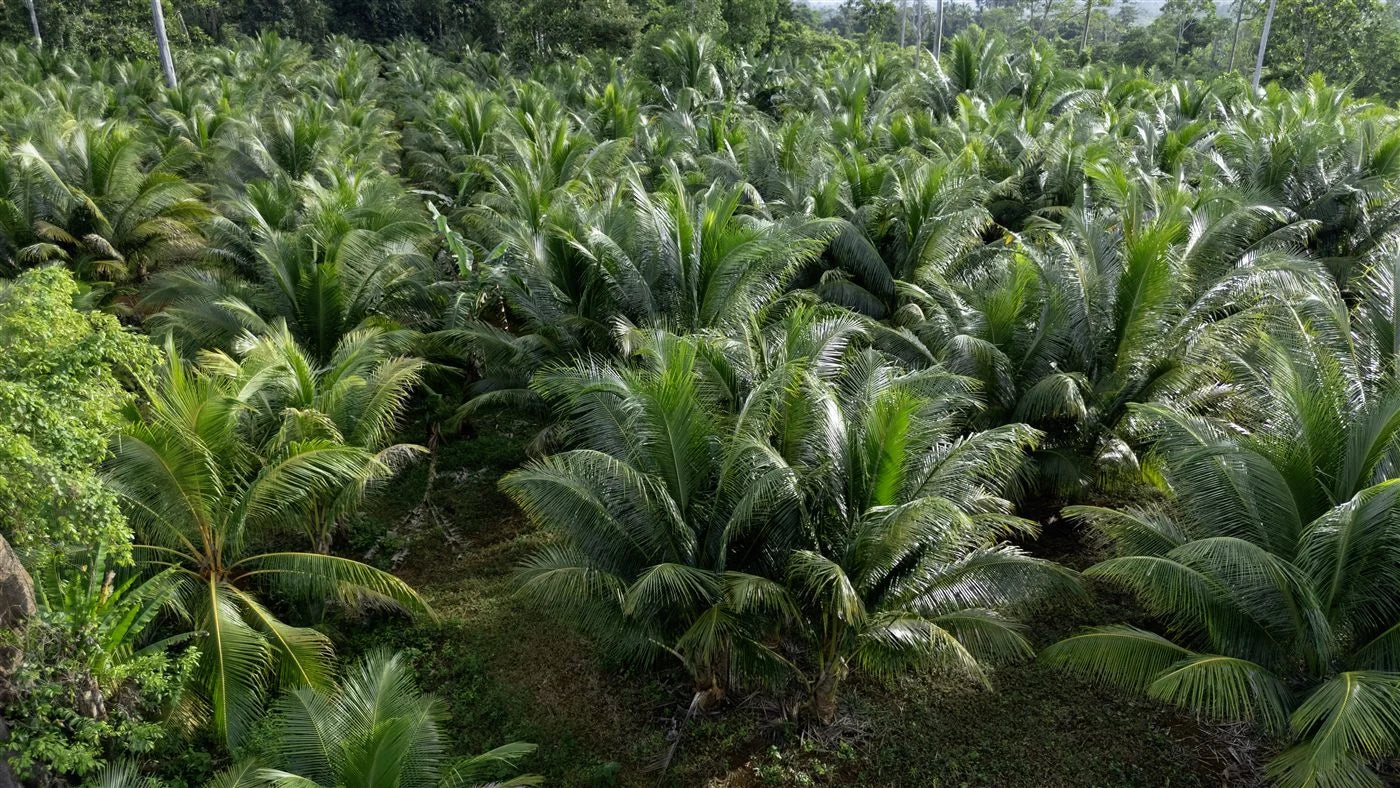
Working with the landscape
Coconut palms grow within a wider landscape of soil, ground cover and other plants. Our environmental story looks at the work among those palms and the materials used as our ingredients travel beyond the farm.
Caring for our palms and soil
Our environmental story begins on the ground, among the coconut palms. At Lionheart Farms, our practices include maintaining living ground cover, making fertiliser on site and tending the soil.
These are practices Lionheart Farms describes as part of its work with the soil. Return to the farm for the setting where the coconut flower nectar is collected.
Describing what we do is different from measuring its ecological results. The practices shared here should not, on their own, be read as proof of a measured environmental outcome.
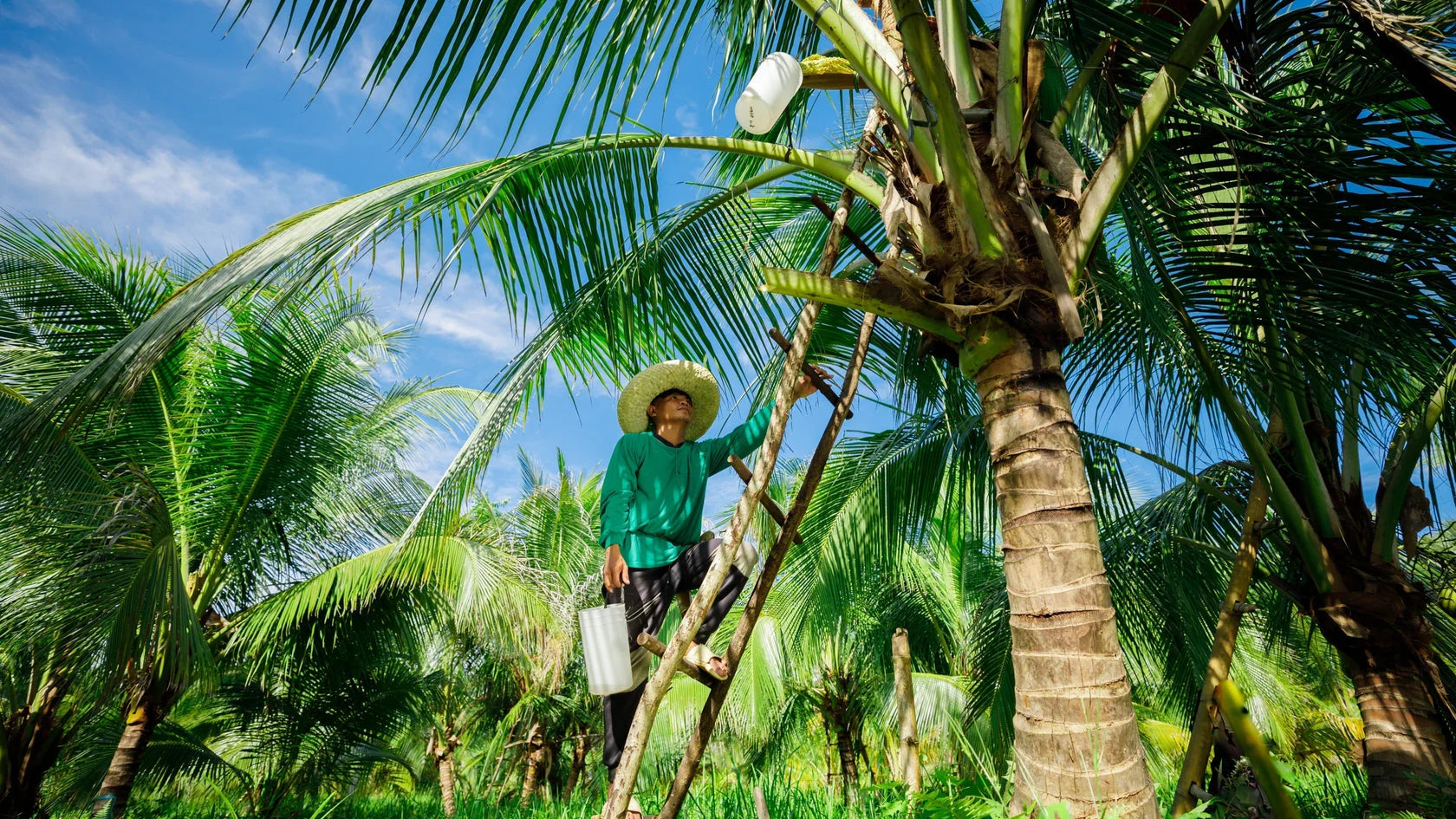
Looking beyond the farm
The journey continues when our liquid ingredients leave the farm. The containers used to move them are another part of the story.
A supplier case study describes reusable bulk containers replacing disposable paper containers in part of our logistics. This is one example of container reuse in our supply chain, not a measure of the full environmental effect.
Return to The farm to discover where our coconut flower nectar begins.
References · external sources